Ebonized Wood in the Driehaus Museum
April 02, 2025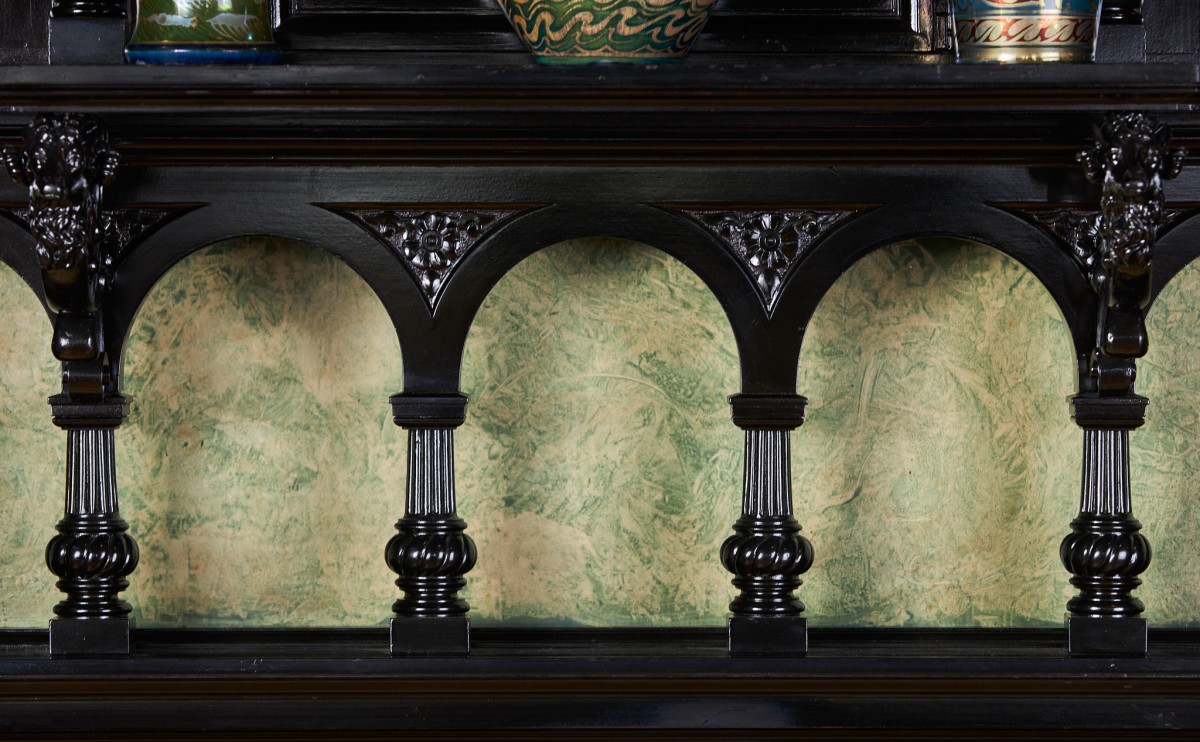
This blog post was written by Lily Theders as part of her work in Loyola University of Chicago's Master's of Public History program.
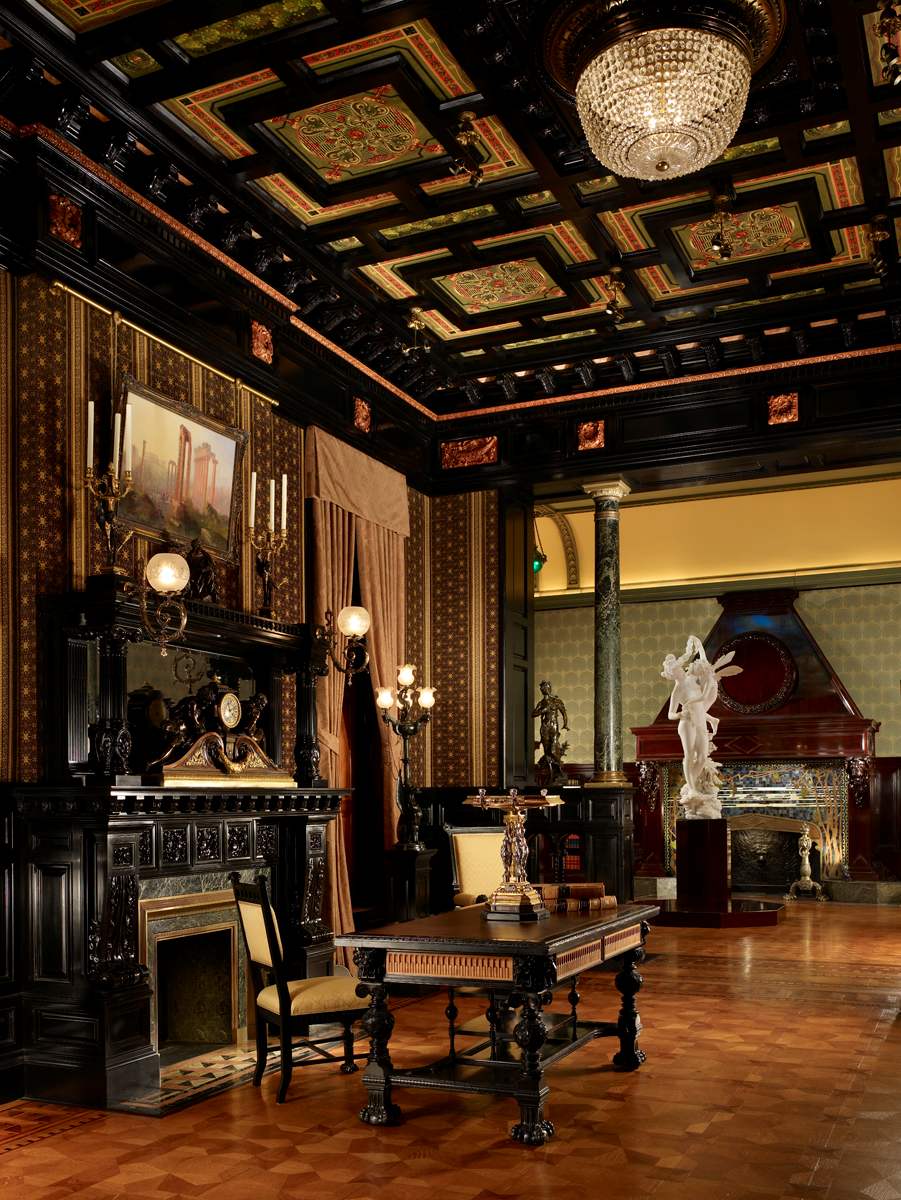
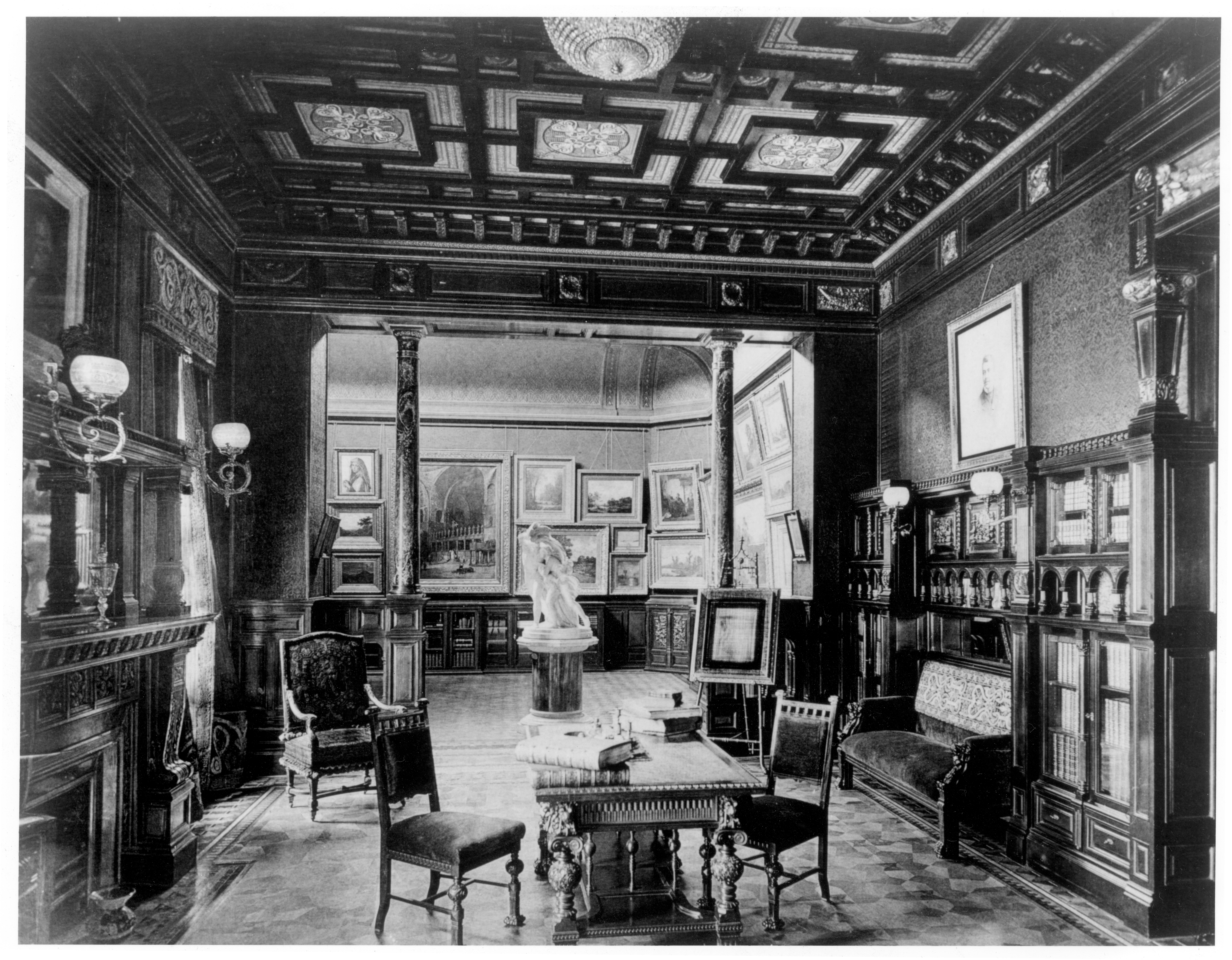
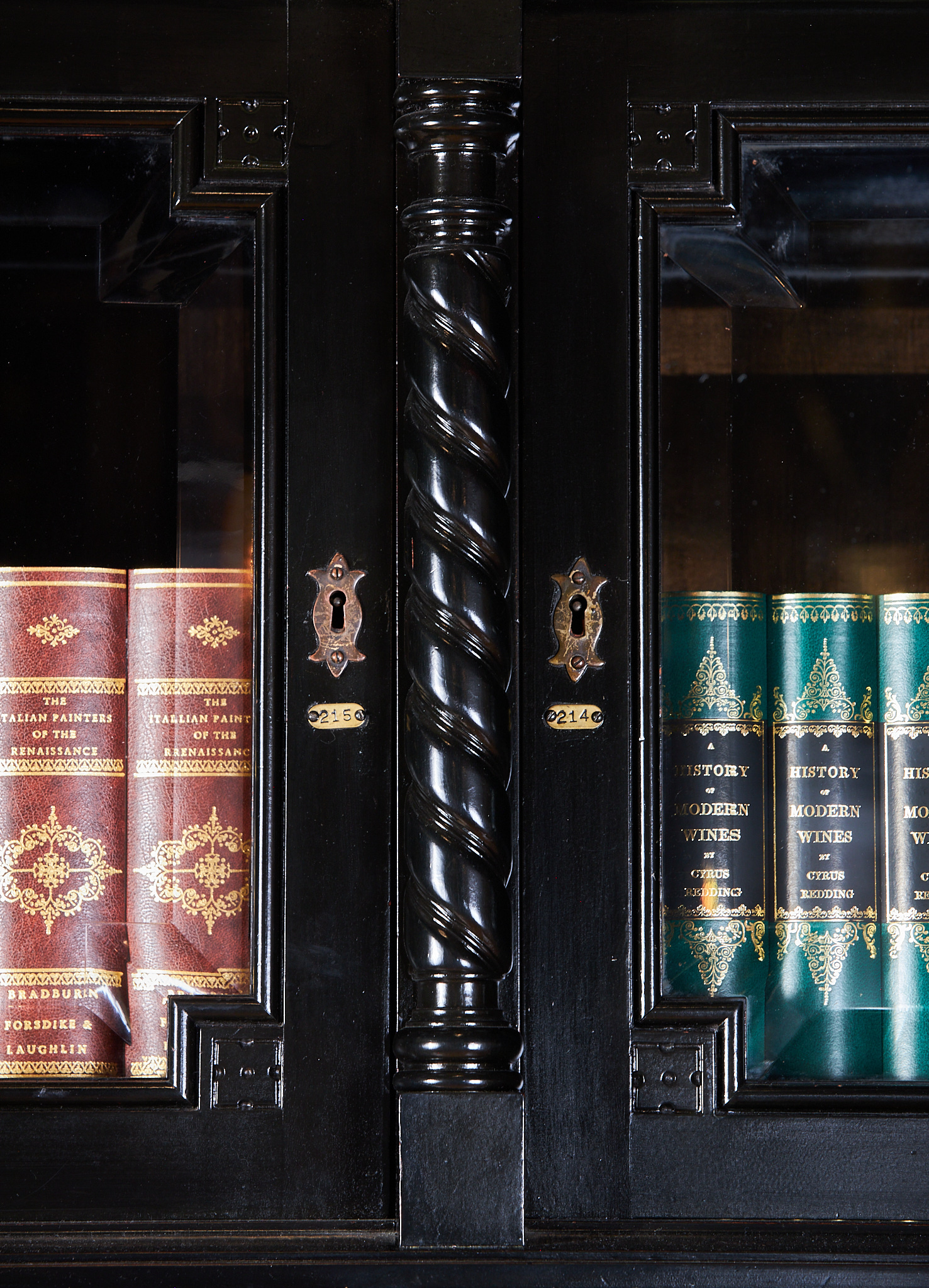
The imposing, black woodwork of the Driehaus Museum's Nickerson Mansion library is one of the most eye-catching elements of the entire home. While this woodwork is most prominently displayed on the walls, it can also be seen in the Victorian portfolio from the Museum’s collection and in the library’s original furniture suite designed by George A. Schastey. At first glance, this black wood may appear to be ebony. In reality, it is something else entirely: a man-made material called ebonized wood.
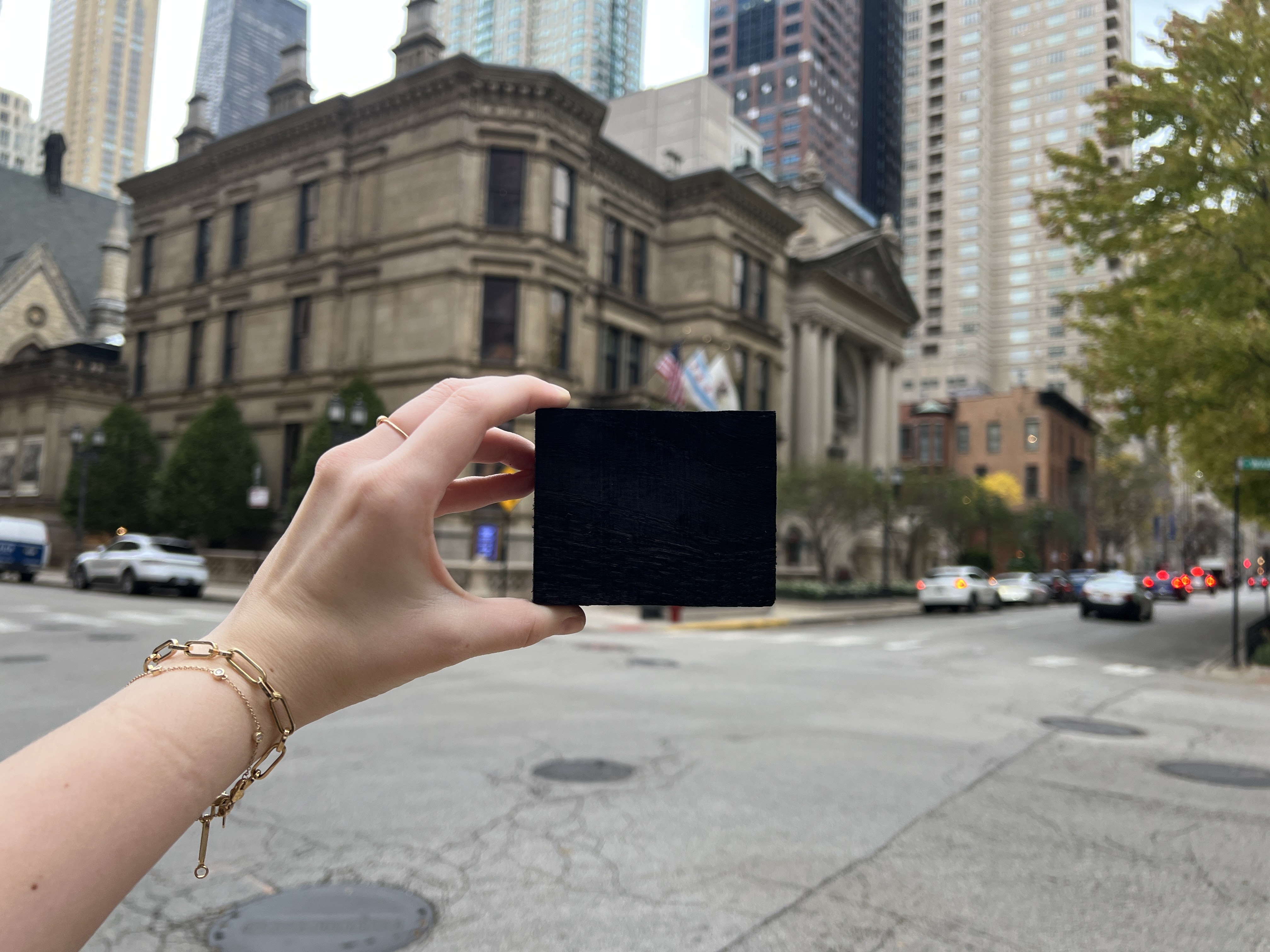
Ebonized wood is made through a simple chemical reaction called “ebonization” which is possible to do at home with a few cheap ingredients including a high tannin wood (the Nickerson Mansion features Cherrywood), extra-fine steel wool, and white vinegar. For lower tannin woods, additional tannins can be added by painting on a layer of logwood extract [1] or black tea. A layer of iron acetate is then painted onto the wood, which is made by allowing extra fine steel wool to soak in a loosely covered container of vinegar for a few days. The iron particles that have leached into the vinegar will react with the tannins, turning the wood black and creating massive amounts of “ebony” for just a fraction of the cost [2].
As the library is in a Renaissance revival style, it attempts to mimic the styles and aesthetics that were popular during the Renaissance period, when ebony was one of the most expensive and sought after woods in the world. The Renaissance overlaps heavily with the Age of Discovery – where Europeans explored, colonized, and conquered land worldwide. Because Europe now had colonies spanning the globe, the Renaissance gave wealthy Europeans access to building materials that they had never had before, including ebony, rosewood, and satinwood (which can be seen in the walls, furniture, and piano of the Nickerson Mansion’s Drawing Room) [3]. These exotic woods were incredibly costly due to the significant effort it took to source them. Additionally, because ebony is a very slow-growing tree, taking 70-100 years to reach a usable size, it will always be a limited resource [4]. This scarcity further increased the price of ebony and turned it into a status symbol, should someone have it in their house.
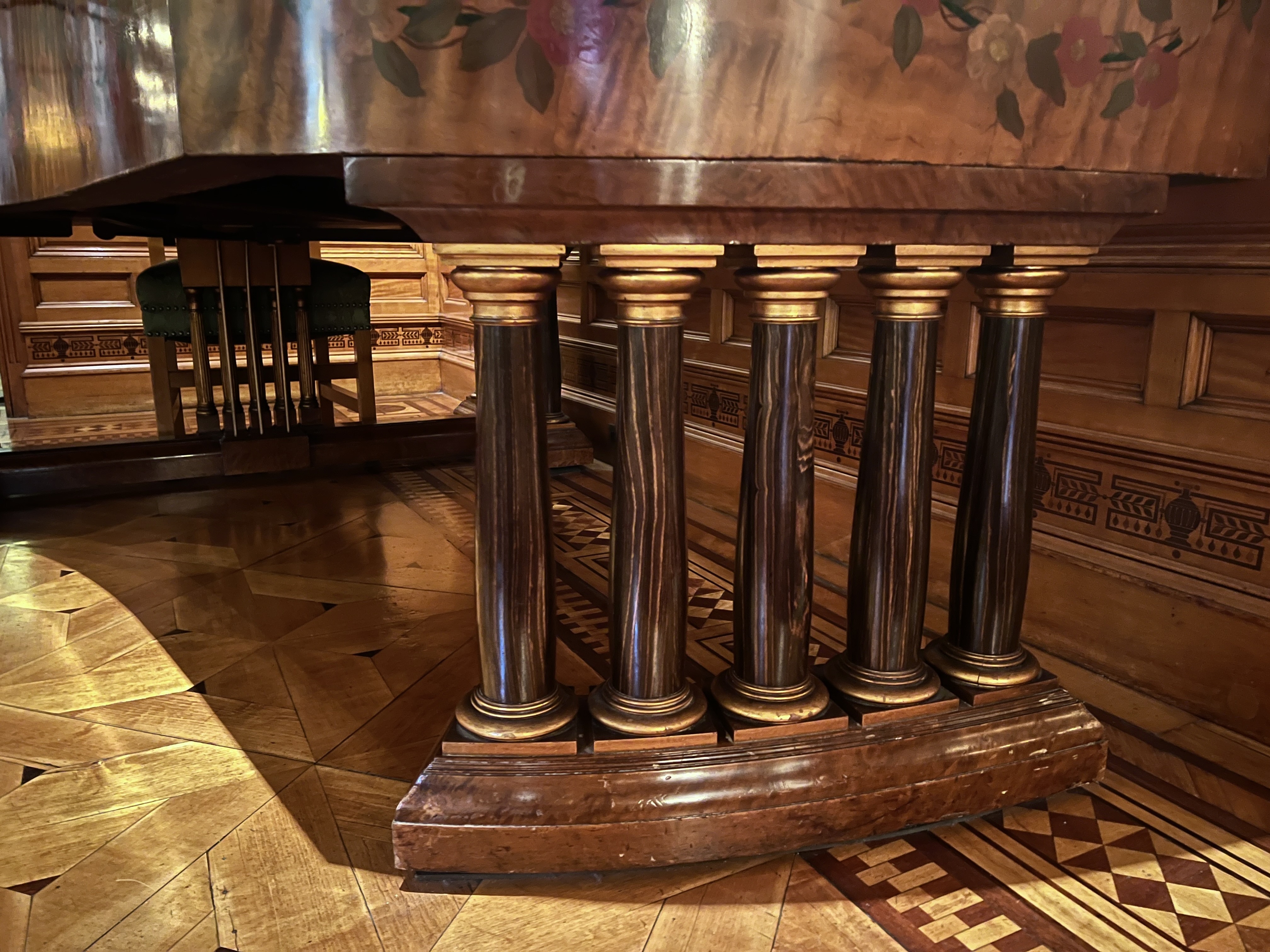
The development of wood staining methods like ebonization caused the demand for ebony to decrease significantly during the 18th century [5]. Despite this, the associations between ebony and wealth persist to this day with one cubic meter costing over $18,000 [6]. So, when the Nickersons were building their “showcase” mansion in the early 1880s, ebony – or the appearance of it through the use of ebonized wood – was an obvious choice to include. Today, the slow growth rate of ebony and the sustained demand for it has led many species to become endangered, some to near extinction. Moreover, under the Food, Conservation, and Energy Act of 2008 [7], ebony, like other endangered woods, is largely illegal to import into the United States [8] making ebonization one of few legal ways to replicate the beauty ebony in homes today.
Notes
[1] William Noyes, Handwork in Wood. Internet Archive, (Peoria, IL: Manual Arts Press, 1910), 211-212. https://archive.org/details/handworkinwood00noye/page/210/mode/2up.
[2] George Vondriska, Ebonizing Wood, (WoodWorkers Guild of America, September 19, 2018). https://www.wwgoa.com/post/ebonizing-wood/.
[3] Brooke Schmelder, The Global Renaissance and the Impact of the Ebony Trade, (Saint Louis Art Museum, July 29, 2024), https://www.slam.org/blog/the-global-renaissance-and-the-impact-of-the-ebony-trade/
[4] The Tree, (African Blackwood Conservation Project. Accessed November 4, 2024.) https://www.blackwoodconservation.org/the-tree/.
[5] John Barrow, “Black Ebony,” In Dictionarium Polygraphicum, or, The Whole Body of Arts Regularly Digested : Containing the Arts of Designing, Drawing, Painting ... Adorned with Proper Sculptures, Curiously Engraven on More than Fifty Copper Plates, (London: C. Hitch and C. Davis in Pater-noster Row, and S. Austen in St. Paul’s Church-Yard, 1735), 360.
[6] V. Deblauwe, “Life History, Uses, Trade and Management of Diospyros Crassiflora Hiern, the Ebony Tree of the Central African Forests: A State of Knowledge,” Forest Ecology and Management 481 (February 2021): 1, https://doi.org/10.1016/j.foreco.2020.118655.
[7] Food, Conservation, and Energy Act of 2008, Pub. L. 110-246, 122 Stat. 1651 (2008) https://www.congress.gov/bill/110th-congress/house-bill/2419
[8] “U.S. Lacey Act.” Forest Governance and Policy, August 2024. https://forestpolicy.org/policy-law/us-lacey-act.